Mary (Staniland) Lambe of St. James's Square
Life
The first we know of Mary Staniland is that Henry Lambe married her on December 16, 1736 in St. James Westminster.1
We also know that once her husband Henry died, she maintained insurance policies for her residence at the south side of St. James's Square. She purchased policies from the Sun Fire Insurance Company in 1779 and 1780 for coverage of £200 and £300, respectively.2
Very little else is known about her life. However, it is because of her generosity to her grandchildren that we are able to know that Henry and Mary are the parents of John Lambe, wine merchant of New Bond Street.
Death
The will of Mary Lambe of St. James Square is full of information.3 She stated the desire to be buried in the same manner as her unnamed husband, and in the same place as him, in the churchyard of St. James Westminster (pictured at left behind St. James's Square in 17504) 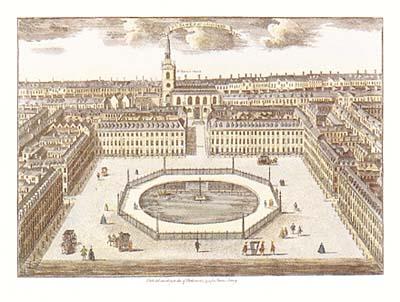 . She left the residue of her estate to her son John, and left money to a nephew Thomas Staniland. The registers of St. James Westminster contain a marriage record between Henry Lambe and Mary Staniland. There also exists a will for Henry Lambe of St. James's Square5 in which he left three properties to his descendants, one of which is a house on St. James's Square that he left to his wife, Mary. He left property to his three sons, John, William, and Thomas. Thomas can be shown to have died after his father but before Mary Lambe,6 and Mary Lambe's will documents the death of William. Because of the coincidence of names, particularly the relatively uncommon last name Staniland, and the son John; and because of the house on St. James's Square, we can conclude that Mary Lambe of St. James Square is actually Mary Staniland who married Henry Lambe.
But how can we connect Mary to John Lambe, wine merchant? In her will, Mary Lambe of St. James Square also left money to each of her grandchildren:
I give and bequeath to my Grandson John Whalley Lambe twenty pounds and my Gold Watch. I give to my Grandson Henry Lambe twenty pounds. I give to my Granddaughter Harriot Lambe twenty pounds. I give to my Grandsons Benjamin Lambe, William Lambe and Alfred Lambe ten pounds each. I give to my Granddaughters Maria Lambe and Caroline Lambe ten pounds each.
The list of grandchildren includes 8 of the 11 children listed in the christening records in St. George Hanover Square as being children of John and Mary Lambe, including the unusual name John Whalley Lambe and - most importantly for our purposes - the relatively uncommon name Alfred Lambe. (Alfred Lambe received his 10 pounds when he was only four years old.) From this evidence we can conclude that Henry and Mary were the parents of John Lambe, wine merchant of New Bond Street, and grandparents of John Lambe's son Alfred Lambe.
Mary's will was proved November 8, 1793.
Henry Lambe, King's Messenger
Three Properties
As noted, Henry left the three properties he owned to his family: a farm called Bradmore Farm in the parish of North Mimms, Hertfordshire; a house on Pall Mall; and an adjoining house on St. James's Square.
Bradmore Farm was made famous by Arthur Young, of which more is said below.
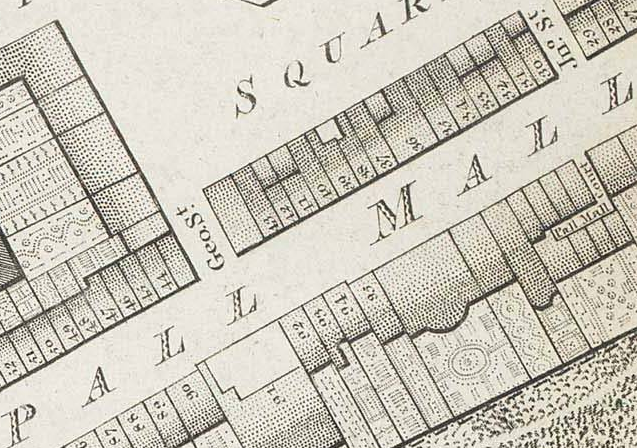 The two adjoining houses are of particular interest. A historic survey of the east, west, and north sides of St. James Square describes each house's owners from the seventeenth to the nineteenth centuries;7 Henry and Mary Lambe are not mentioned. Residents of these sides of the square normally had important titles and large fortunes. The south side of the square, which is parallel and close to Pall Mall, was built later,8 and the lots were smaller because they are sandwiched between St. James's Square and Pall Mall, as shown in the map detail above right from 1799.9 The owners of these houses were generally exluded from the survey referred to above. Henry's house was on this side of the square, which is confirmed by the description of the St. James's Square house in of one of his wife's insurance policies discussed above. This explains how his two houses could adjoin.
Henry's presence on Pall Mall goes back to the 1740s. The election record from a by-election in 1749 shows that he lived on Pall Mall.10 Since ballots were not secret, we also know that he voted for the winner. An anlysis of rate books for property taxes from 1735 to 1749 shows that he first appeared on Pall Mall between the summers of 1743 and 1744. 11
What did John Lambe do with the two adjoining houses once he intherited them? Ten years after his mother Mary Lambe's death, he put them up for sale. For several days in 1802, and again for several days in 1803, advertisements appeared in London newspapers, with John Lambe as the contact. One such advertisement appeared in The Morning Post on April 29, 1802, and read as follows:12
FREEHOLD, Pall-mall, and St. James's-square, - To be SOLD together, by Private Contract, TWO FREEHOLD HOUSES, situate No. 2, St. James's-square, and No. 32, Pall-mall, adjoining each other. For particulars inquire of Mr. Lambe, No. 143, New Bond-st.
The 1803 advertisements were similar, except that mention was made of 2 St. James's Square having a bay window. These advertisements clearly connect the Lambes of New Bond Street with Henry and Mary Lambe of St. James's Square and Pall Mall.
Henry's will was proved January 4, 1772.
King's Messenger and World Traveller
Three key pieces of evidence show that Henry Lamb, king's messenger, is closely connected to each of the three properties in the will of our Henry Lambe, proving that they are the same person.
Before describing those pieces of evidence, it is important to note that of all the king's messengers in the eighteenth century, only one was named Lamb, according to Office Holders in Modern Britain.13 This person was one Henry Lamb, who was appointed Messenger in Extraordinary on May 18, 1745, and then Messenger in Ordinary on July 12, 1746. Thus any references to Mr. Lamb, king's messenger, from this time period refer to this Henry Lamb.
On December 21, 1771, the following was reported in Bingley's Journal under the heading, Died:14
Yesterday, in Holles-Street, Cavendish Square, Thomas Griffin, Esq; Admiral of the White Squadron. The same day, in St. James' Square, Mr. Lambe, one of his Majesty's Messengers in-Ordinary.
This connects Henry Lamb, king's messenger, to St. James Square, and also puts the date of death of Henry Lamb, king's messenger, only two weeks before the will of our Henry was proved.
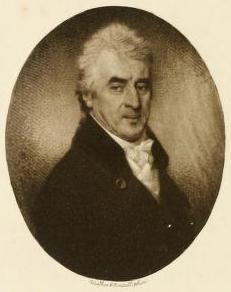
A second key piece of evidence comes from the Autobiography of Arthur Young.15 Arthur Young, pictured below,16 travelled in England, Ireland and France in the eighteenth century and wrote widely on reforming agricultural methods. In his autobiography, he states:
My landlord, a Mr. Lamb, was a King's messenger. He had formerly been, I believe, butler or valet de chambre to the Duke of Leeds, and gave me many accounts of the journeys he had made to Petersburg, Constantinople, Naples, &c., profiting by every journey very considerably, as he expended much less in travelling than was allowed by Government. I write from memory, but I think he said that journey to Petersburg or Constantinople paid him a neat profit of a hundred guineas.
I have not found any documentary evidence to corroborate the claim of a connection to the Duke of Leeds.
A third piece of evidence can be found in the book entitled London in the Jacobite Times, in a chapter describing what happened to the imprisoned Jacobites in the 1850s.17 It states:
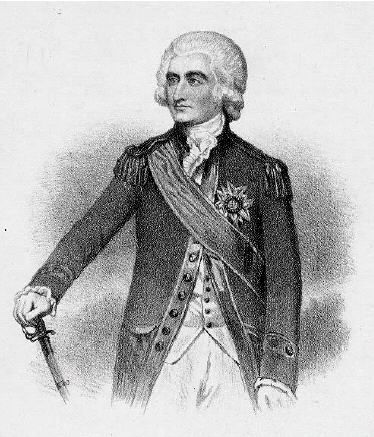
The most joyous party of Jacobites was that of the Earl of Cromartie (or 'Mr. Mackenzie,' as he was called since his attainder) and his family. The eldest son, Lord Macleod [pictured at right18] was freely pardoned. The earl was permitted to leave the Tower, but he was bound to reside in the house of a King's Messenger. Accordingly, the earl, countess, my lord, the younger children, and a servant or two, were to be seen alighting from a hackney-coach at the door of Mr. Lamb's house in Pall Mall. Their appearance at the windows attracted many a gazer, and when Mr. Lamb permitted them to stroll on the Mall, crowds of sympathisers congratulated them as they passed.
This source connects Henry Lamb, king's messenger, with a house on Pall Mall, which would have been only two blocks away from St. James Palace, the royal residence in London at the time, an important location for a king's messenger.
Thus, Henry Lamb, king's messenger, is connected to all three properties mentioned in our Henry's will, and our Henry Lambe is therefore the same person as Henry Lamb, king's messenger.
A mystery remains as to why Henry lived close to the royal residence. As noted above, Henry first began to live on Pall Mall between 1743 and 1744, before he was appointed a king's messenger. Did he hold another position in the royal household prior to being a king's messenger? Otherwise, why did he move to Pall Mall in the first place? How could he afford such a house? The answers to these questions are not known at this time.
A copy of the official record of his appointment as Messenger-in-Ordinary is shown below.19 Note that the official title of a king's messenger was "Messenger of the Great Chamber in Ordinary to his Majesty".
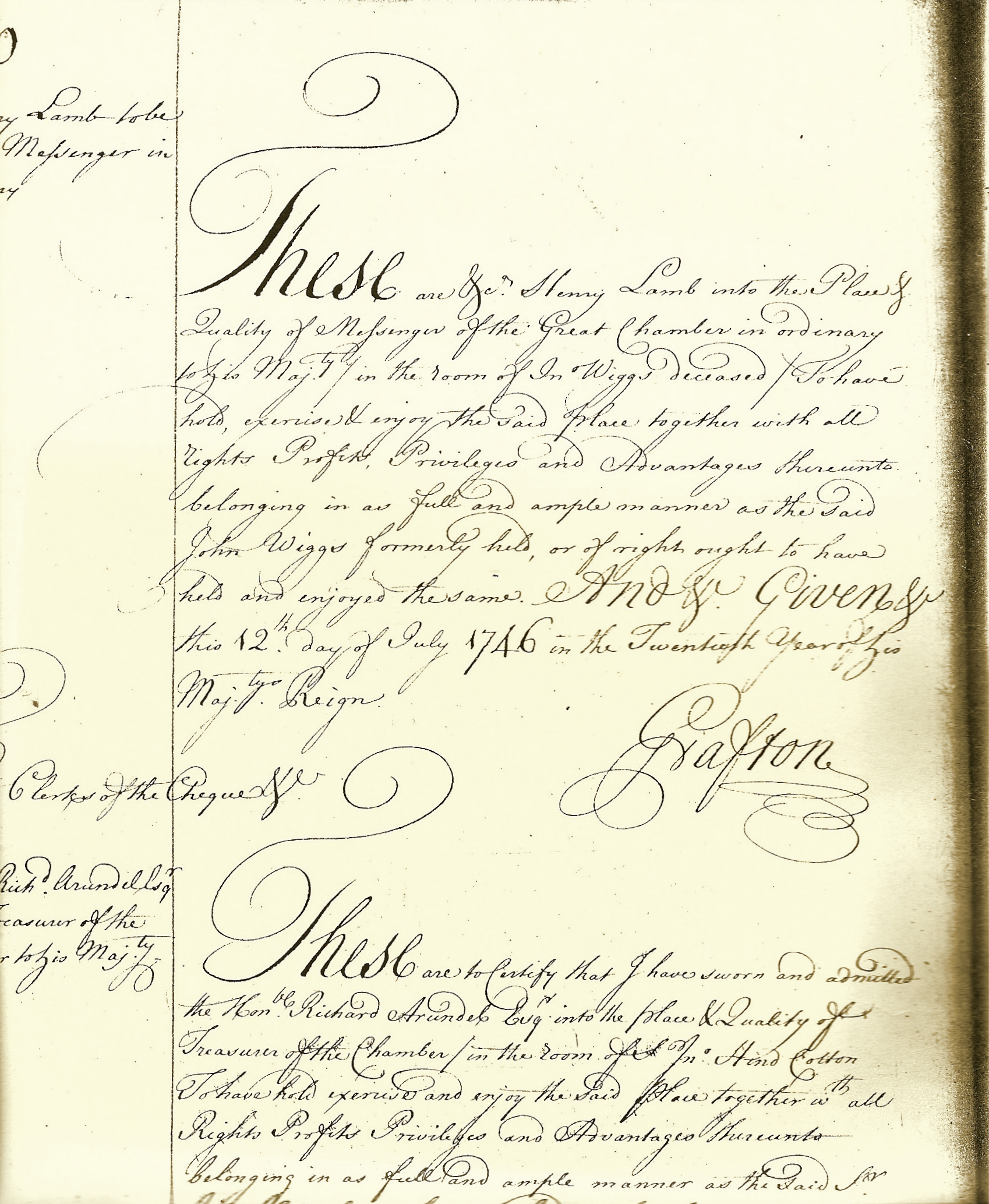 The official record is abbreviated in several places. The meaning of the first '&c' can be understood by reading the subsequent entry on the same page.
As a king's messenger, Henry was entrusted with secret communication to and from the King, the chief Minister, and other Ministers. For example, in the following letter written in 1766 from Sir Andrew Mitchell, the British envoy to Prussia, to William Pitt, then the chief Minister (the equivalent of Prime Minister), Henry was referred to specifically:20
I had the honour of your Lordship's secret letter of the 8th, by Lambe the messenger, acquainting me with his Majesty's royal purpose to establish a firm and solid system, for the maintenance of the public tranquility.
The fact that Henry was referred to implies he must have been personally known to the two correspondents, which is consistent with the fact that he had been a king's messenger for more than 20 years at the time this letter was written, and so familiar to people who regularly used king's messengers. This and other references to Henry in letters mean that he came into personal contact with some of the most powerful people of the age.
Henry seems to have been involved in considerable diplomacy with St. Petersburg following the War of Austrian Succession, in which Britain and Austria struggled against France, Bavaria, Saxony, and Spain.21 The War of Austrian Succession ended in 1748, and by 1750, Henry was ferrying letters, some protected by cipher, between Colonel Guy Dixon, the British amabassador to Russia, and the Duke of Newcastle, the longtime Secretary of State.22 A book of such letters from 1750-1751 contains no fewer than 57 references to Henry, either arriving or departing. Henry appears to be one of two messengers used for that route. These discussions seemingly involved Britain acceding to a "Treaty of 1746" and urging Russia not to take military action during a very tense period.
Several letters in this book give us a picture of Henry's travels. A few references are made to Henry travelling through Vienna to get to and from St. Petersburg,23 showing that Austria was significantly involved in the discussions between Britain and Russia, and complicating Henry's journeys. One letter implies that Henry could stay in St. Petersburg for more than a few days. In the letter, Colonel Dixon states that he will need to redispatch Henry "a great deal sooner" than expected.24 His letter is dated on a Saturday and Henry's revised date of departure is a Tuesday. This could suggest that his normal stay would have been one or more weeks.
That the British government relied on Henry to carry secret diplomatic messages, and even carry treaties safely back to England for signature,25 shows the level of trust placed in him.
An interesting fact comes from the London Evening Post, which stated on December 31, 1771,26
Promoted.] Mr. John Padmore, one of his Majesty's Messengers in Ordinary, in the room of Mr. Lamb, deceased.
This quote, which uses similar language to the official appointment reproduced above, suggests that Henry had rooms provided as part of his job, perhaps in St. James Palace.
Besides a room, the job had other benefits. The life of a king's messenger is described in V. Wheeler-Holohan's book The History of the King's Messengers. He describes some of the benefits of the job as follows:27
Each Messenger posessed his own carriage. In normal times these vehicles were kept permanently at Dover, and were big, strong vehicles, built in England for the Messengers themselves to their own orders and specifications. The Messengers had to keep them in perfect order; they were as light as could be compatible with great strength, and cost anything between two hundred and three hundred pounds.
These coaches were so fashioned that the seats could be turned into beds; they had commodious receptacles for the despatches and personal baggage of the King's Messengers, lockers for wine and food, and specially contrived racks for arms. A pair of pistols and a sword were always within easy reach. A complete set of tools had to be carried, and each Messenger, as a rule, was quite competent to effect repairs, mend harness or even shoe horses!
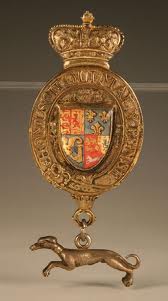
In addition, for identification, king's messengers carried a silver grehound badge issued by the King. An example of the kind issued by George III before 1761, such as Henry would have received, is shown below.28
Anything like a long spell of rest during a journey was impossible, the Messenger had to be so frequently on the alert to pay for his horses and postilions at each post.
An overseas journey could be quite dangerous. Even just crossing the English Channel could be difficult.30
The Messenger always set off at a spanking trot from Whitehall in a chaise, and whatever happened abroad, in England they always allowed him his four horses. Dover was, as a rule, reached in seven hours, sometimes in as much as twenty minutes less, and then his difficulties commenced.
If he could cross to Calais on the ordinary packet he did so, if not he hired a boat. All sorts of boats were used by him, big and little, sea-worthy and leaking. He very often landed wet through; the price he had to pay for his crossing often varied considerably, for on occasions he might get over for three pounds ten shillings, and at other times he has been known to pay as much as thirty-five pounds!
Henry's own experience was that the danger of sinking was accompanied by the danger of piracy. Writing in 1762 to the Chairman of the East India Company, a correspondent in Rotterdam described Henry being chased by French pirates:31
You will hear from the Hague that Lambe the Messenger in Captain Baggot's Boat was chased into Compveer by a French Privateer, which also keeps Captain Cockerell with our Mail of the 3d Instant blocked up at Helvoet, and gives us great Uneasiness for the Mail from England with the letters of the said Date. We must expect, as there are several Privateers out from Dunkirk, to have these Obstructions frequently, unless Two or Three Cutters are appointed to cruise for the Protection of the Packet Boats, which would also be of great Advantage to the Trade.
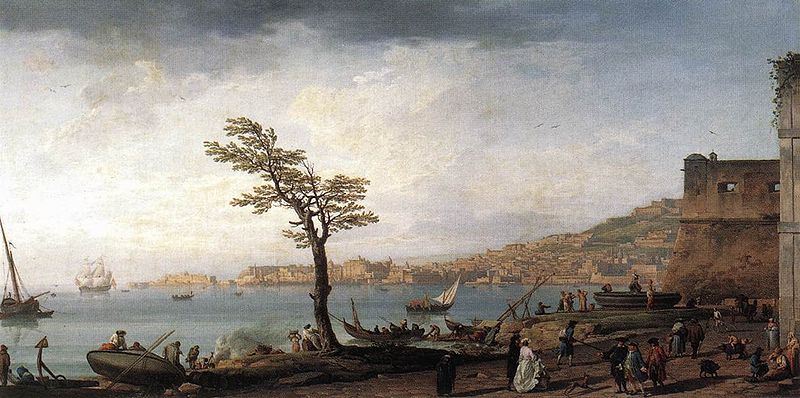
As a king's messenger, Henry travelled much more widely than many of his descendants likely did. The quote from Arthur Young shows that he travelled to St. Petersburg, then the capital of Russia; Naples, then part of the Kingdom of Naples and Sicily, pictured at right in 1748;32 and Constantinople, capital of the Ottoman Republic. The letters regarding his travels to St. Petersburg cited above also show him travelling to Vienna, then as now the capital of Austria. Other newspaper accounts and letters refer to him returning from Prussia33, Hanover,34 where he had been with George II, who was also the Elector of Hanover, Dublin,35 Rotterdam,36 and Berlin.37 Henry surely travelled to many other European and near-Asian destinations, as England pursued diplomacy with other states. Henry was also recorded escorting Jacobite prisoners within England during the Jacobite uprising of 1745.38
Anyone attempting further research into Henry's life should note that another Lambe, Aaron Lambe, auctioneer, had a house on Pall Mall that he used to display his wares. This house became the first location of the Royal Academy, and was on the south side of Pall Mall down the street from where our Henry's house must have been.39 Henry's house was certainly on the north side of Pall Mall. As far as I know, Aaron Lambe and Henry are not related. Most references to Lamb or Lambe on Pall Mall refer to Aaron Lambe, and not to the family we are interested in.
Ancestry
Henry's ancestry is unknown at this time. Could he have been descended from other Lambe families that had connections to the royal household, such as the family of Patrick Lambe, chief cook to many soveriegns, or John Lambe, DD, who not only served as a royal chaplain, but also had strong connections to Hertfordshire? Or could he still be related somehow to those famous Lambes, as Robert Lambe claimed in 1841? I am hopeful that future research will reveal the truth.
Footnotes
1Marriage records of St. James Westminster, as reported in the International Genealogical Index, call number 1042313, downloaded February 14, 2009.
2Sun Fire Insurance Company Insurance certificates for Mary Lambe dated 1779 and Mary Lamb dated 1780, both for St. James's Square.
3Will of Mary Lambe of Saint James Square as reported in the records of the Prerogative Court of Canterbury, catalogue reference Prob 11/1238.
4St. James's Square from Stow's London Squares, 1750, accessed on en.wikipedia.org/wiki on July 3, 2011.
5Will of Henry Lambe of St. James's Square as reported in the records of the Prerogative Court of Canterbury, catalogue reference Prob 11/974.
6Mortgage deed by Elizabeth Lambe of Greek Street, St. Anne's, Soho, widow and executrix of Thomas Lambe, who was eldest son of Henry Lambe late of St. James' Square, dated January 1, 1774, ref. DEGA/35741, on National Archives' Access to Archives website, www.nationalarchives.gov.uk/A2A, accessed July 11,2009.
7Sheppard, F.H.W., Survey of London volumes 29 and 30, St. James pt. 1, 1960, accessed on www.british-history.ac.uk on September 4, 2011.
8Sheppard, Survey of London chapter IV.
9Horwood, Richard, Detail of Map of London, Westminster and Southwark, 1799, www.motco.com, accessed March 20, 2009.
10A Copy of the Poll for a Citizen for the City and Liberty of Westminster, London: J. Osborn, December 1749.
11Rate Books for City of Westminster, St. James, Piccadilly, Pall Mall, North Side, 10 June 1735, 11 June 1736, 11 June 1739, 10 June 1740, 11 June 1743, 9 June 1744, 9 June 1745, 9 June 1747, 10 June 1748, and 9 June 1749.
12Morning Post and Gazeteer, London, April 29, 1802.
13Bucholtz, R.O., Office Holders of Modern Britain, chapter 11 (revised), Messengers 1660-1837, 2006, accessed on www.british-history.ac.uk on January 9, 2011.
14Bingley's Journal, London, December 21, 1771.
15Young, Arthur, The Autobiography of Arthur Young, M. Betham-Edwards (ed.), London: Smith, Elder & Co., 1898, p. 45.
16Young, Autobiography, frontspiece.
17Doran, Dr. John, London in Jacobite Times, London: Richard Bentley & Son, 1877, p. 260.
18Unknown Artist, John, Lord Macleod, Blaikie Collection, National Library of Scotland.
19Record of appointment of Henry Lamb as Messenger of the Great Chamber in ordinary, July 12, 1746.
20Letter from Sir Andrew Mitchell to the Earl of Chatham (secret), August 21, 1766 (Sir Andrew Mitchell was then a Member of Parliament and Envoy to Prussia, and William Pitt, the Earl of Chatham, was the chief Minister), Correspondence of William Pitt, Earl of Chatham, vol. III, London: John Murray, 1839, p. 46.
21Encyclopedia Britannica entry on "War of the Austrian Succession", https://www.britannica.com/event/War-of-the-Austrian-Succession, retrieved December 25, 2016.
22Diplomatic Correspondence of the British Representatives to the Court of Elizabeth Petrovna, part XV, 1750-1753 (Дипломатическая переписка английских представителей при дворе императрийцы Елисаветы Петровны. Ч.15 1750-1753), Imperial Russian Historical Society: before 1916.
23Diplomatic Correspondence, pp. 211 and 216.
24Diplomatic Correspondence, p. 266.
25"The Monthly Catalogue For December 1757" in The Monthly Review or Literary Journal, vol. XVII, London: R. Griffiths, 1757, p. 558-559.
26London Evening Post, London, December 31, 1771.
27Wheeler-Holohan, Vincent, The History of the King's Messengers, New York: E. P. Dutton & Company, 1935, p. 156.
28Photograph of king's messenger badge from www.tooveys.com, accessed September 1, 2012.
29Wheeler-Holohan, The History of the King's Messengers, p. 157.
30Wheeler-Holohan, The History of the King's Messengers, p. 155.
31Letter from Robert Wolters to Thomas Roos (Thomas Roos was Chairman of the East India Company), July 16, 1762, Tenth Report of the Royal Commission of Historical Manuscripts, London: Eyre and Spotiswoode, 1885, pp. 338-339.
32Vernet, Joseph, View of Naples, Musee du Louvre, 1748.
33British Spy or The Universal London Weekly Journal, London, September 10, 1757.
34London Evening Post, London, August 24, 1745.
35Letter from John Breley to the Postmaster General of London, National Archives of the United Kingdom, October 5, 1745.
36Letter from Robert Wolters to Thomas Roos, 1762, Tenth Report, 1885.
37Letter from Sir Andrew Mitchell to the Earl of Chatham (secret), 1766, Correspondence of William Pitt.
38"The Correspondence of John Collier, Five Times Mayor of Hastings, and his Connection with the Pelham Family" in Sussex Archaeological Collections, vol. XLV, Lewes: Farncombe & Co., Ltd., Printers, 1902, p. 83.
39Hutchinson, Sidney C., The History of the Royal Academy, 1768-1968, New York: Taplinger Publishing Co, Inc, 1968, p. 51.
Andrew G. Clarkson | 
Copyright 2012-2023 | All Rights Reserved
Website design is based on a template by: Genealogy Web Creations